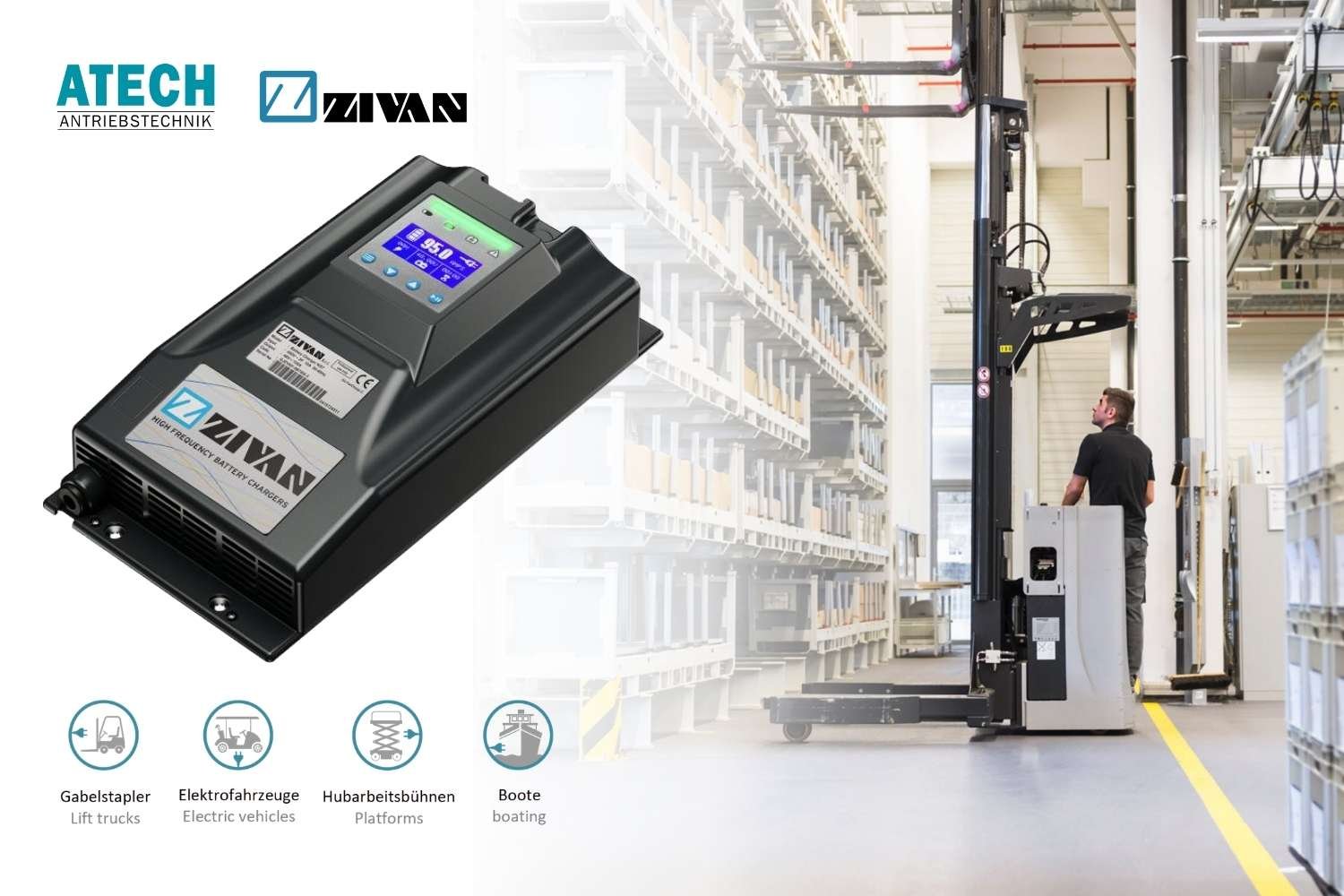
The NG1 / 5 / 7 / 9 / 9+ series will now receive a graphic display in place of the previous LED indicator. It shows state of charge, charging phase, voltage, current and alarms in plain text instead of translating them into LED codes. Charging power, efficiency and protection class remain unchanged, as only the display is affected. The LED version is thus being replaced by a considerably more user-friendly variant. The following article shows what the graphic display shows in detail and how you can get a device with the new display.
What changes on the NG series battery charger
The charger itself has not changed. Only the user interface is affected. Until now, a multicolored LED indicated the charging process, supplemented by a small display for voltage, current, charged ampere-hours and the remaining time until the end of charge, as the current data sheet for the three-phase NG5 series shows. The new graphic display presents the same values together with the state of charge (SOC), the current charging phase and any alarm messages on one screen, which even less technically experienced staff can read without difficulty.
What the new display shows
The graphic display combines all the information relevant to the current charging process. This includes the state of charge in percent, the current charging phase, the applied voltage, the charging current, the ampere-hours already charged, as well as alarms and the status of the forced ventilation. If the battery runs too hot, the display reports this in plain text together with the remaining time until release, instead of merely flashing a warning light.
Technically, the display is connected to the same CAN bus as before, a digital interface over which charger, battery and vehicle control exchange data. It can be addressed with either 11 or 29 bit and set between 125 kBit/s and 1 Mbit/s. If the vehicle already has a battery management system (BMS) or a vehicle computer in the form of an ECU, it can control the display directly and integrate it into its own user interface. This option also remains available for manufacturers who operate several chargers in parallel or in master-slave mode.
Which vehicles and applications the chargers are suited for
The ZIVAN charger series NG1 to NG9 are designed for almost all common battery types, from lead-acid and lead-gel to AGM and NiCd, up to lithium-ion cells and double-layer capacitors. They are used in forklifts, aerial work platforms, electric vehicles and boats, among others, and according to the NG5 series data sheet also in wind turbines. The product family thus covers a large share of the applications for which ATECH supplies drive solutions, from industrial trucks and automated guided vehicles to special vehicles.
Anyone ordering an NG3 series charger with graphic display today receives, for example, a device with protection class IP20, an operating temperature range of minus 20 to plus 50 degrees Celsius and an efficiency of over 85 percent in single-phase operation. The three-phase NG5 / 7 / 9 / 9+ series achieve an efficiency of over 87 percent with the same protection class and deliver up to 160 amperes of charging current, depending on the output voltage. Both ranges are short-circuit and reverse-polarity protected and can be adapted to different battery chemistries thanks to programmable charging curves.
How to get a charger with the new display
Whether you are placing a new order or retrofitting an existing fleet, the easiest way to clarify the right configuration is in a personal conversation. Our sales experts will be glad to advise you on charging technology, battery connectors and contactors, as they know the differences between the NG series from daily practice. You can reach our team by phone at +49 (0) 86 77 98 09-0 or by email at info@atech-antriebstechnik.de. Together with you, we will determine which output voltage, charging current and product variant suit your application, and prepare a quotation tailored precisely to your project.
Conclusion
The charger itself remains unchanged in the NG1, NG3, NG5, NG7 and NG9 series, and only the user interface is new. Instead of the previous LED indicator, a graphic display will be available in future, showing state of charge, charging phase, voltage, current and alarms directly in plain text, and it can be controlled via CAN bus by the battery management system or vehicle computer if required. The LED version is gradually being replaced by the graphic display as the standard stock item, so the display is likely to be available more quickly in the medium term. Which display variant you choose depends on your application, your spare parts inventory and your vehicle control. Hermann Empl will advise you individually and put together a suitable quotation. An overview of the complete ZIVAN charger series and further charging solutions for industrial vehicles can be found on the ATECH website.